Меню
AUTOBIOGRAPHY
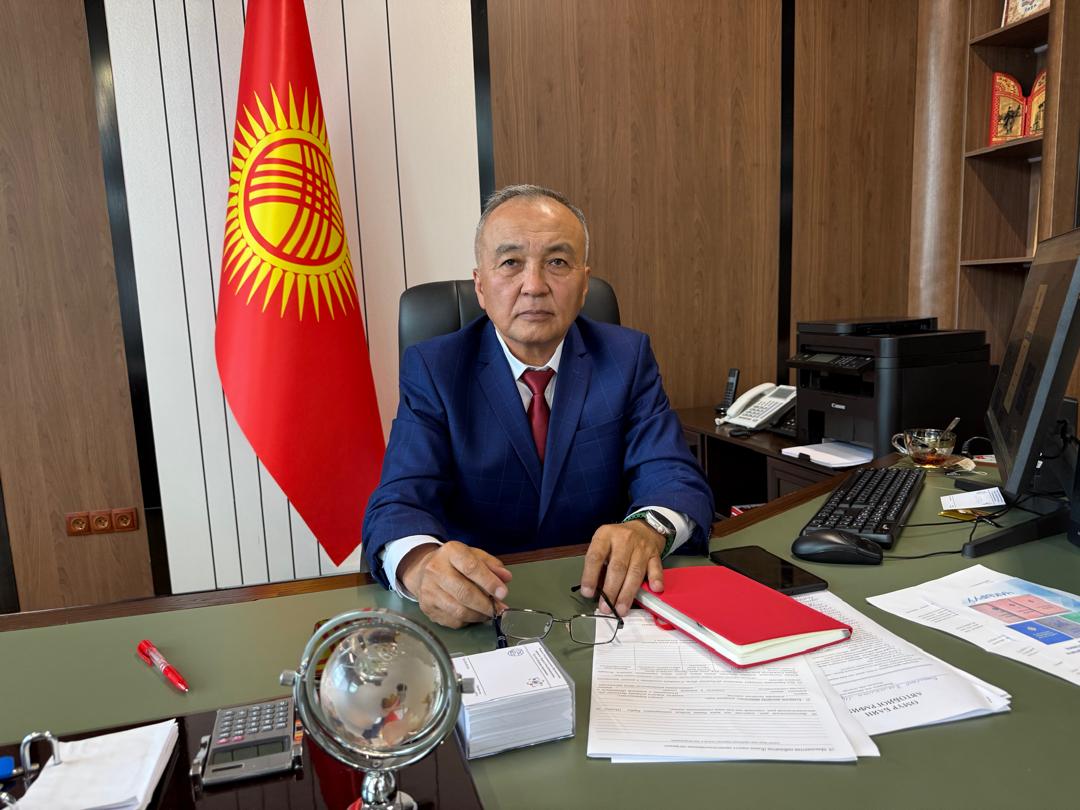
Dzhenbaev Bekmamat Murzakmatovich was born on December 29, 1960, in the village of Sary-Bulak, Suzak District, Jalal-Abad Region, Kyrgyzstan. Nationality - Kyrgyz. In 1978, he graduated from Togolok Moldo Secondary School No. 15 in Suzak District. From 1978 to 1979, he studied at Vocational Technical School No. 3 in Bishkek. From 1979 to 1981, he served in the Soviet Army.
From 1981 to 1982, he attended the Preparatory Department of Kyrgyz State University and successfully graduated from the Faculty of Biology in 1987. He started his career in 1987 at the Research Sector of Kyrgyz State University. In 1988, he was admitted as a trainee researcher to the Laboratory of Plant Biogeochemistry at the Institute of Biology of the Academy of Sciences of the Kyrgyz Republic and was sent to Moscow to the Institute of Geochemistry and Analytical Chemistry of the Academy of Sciences of the USSR.
From 1988 to 1990, he worked as a Research Trainee at the Laboratory of Environmental Biogeochemistry of the Institute of Geochemistry and Analytical Chemistry, Russian Academy of Sciences. From 1991 to 1993, he pursued full-time postgraduate studies in Biogeochemistry at the same institute. In 1993, he successfully completed his postgraduate studies and defended his Candidate of Sciences dissertation in Biogeochemistry at Lomonosov Moscow State University entitled “Geochemical Ecology of Amphibians and Reptiles under Varying Levels of Selenium and Mercury.
Since 1993, he has worked as a Principal Researcher at the Laboratory of Ecology and Biogeochemistry of the Institute of Biology and Soil Science of the National Academy of Sciences of the Kyrgyz Republic (NAS KR). In 1996, he was awarded the academic title of Senior Researcher by the Higher Attestation Commission of the Kyrgyz Republic. In 2001, he defended his Doctor of Sciences dissertation in Ecology entitled "Geochemical Ecology of Organisms in the Natural and Technogenic Landscapes of Kyrgyzstan."
From 2002 to 2004, he served as Head of the Department of Ecology at the Institute of Ecology and Nature Management of I. Arabaev Pedagogical University, where he lectured on the courses “Radioecology” and “Biosphere Studies.”
In 2005, he was elected Director of the Institute of Biology and Soil Science of the National Academy of Sciences of the Kyrgyz Republic, where he worked until 2017. In 2008, he was awarded the academic title of Professor by the Higher Attestation Commission of the Kyrgyz Republic. In 1989 and 1996, he participated in biogeochemical expeditions in the Central Asian region, and in 1990–1992 and 1994, in the Moscow Region of Russia. The materials of the expeditions and research were presented at national, regional and international conferences and symposiums.
From 2015 to 2017, he worked as a lecturer at the Moscow Engineering Physics Institute (MEPhI), Russia, and participated in the CIS program “Atomic Commonwealth XXI”. The program focused on the training and retraining of young specialists in the field of nuclear and radiation safety.
Bekmamat Dzhenbaev is the author of 229 scientific publications, including 8 monographs, 2 textbooks, and 3 methodological manuals. He has also made innovative contributions to the fields of geochemical ecology, biogeochemistry, and radioecology.
Bekmamat Dzhenbaev is a member of the Russian School of Biogeochemistry and Geochemistry, a member of the Dissertation Councils of the Higher Attestation Commission of the Kyrgyz Republic and Chairman of the Interdepartmental Council under the Institute of Biology and Soil Science of the National Academy of Sciences of the Kyrgyz Republic. Under his supervision, 9 Candidates of Sciences and 1 Doctor of Sciences have successfully completed their degrees. He currently serves as the scientific supervisor of 9 postgraduate students.
His main research interests include the study of biogeochemical, radiobiogeochemical, and radioecological processes in environmental systems; the biogeochemistry of continents and the determination of the biogeochemical role of terrestrial organisms; and the geochemical ecology of organisms, continuing the scientific legacy of Academician V. I. Vernadsky.
He carried out the geochemical zoning of the territory of Kyrgyzstan and developed an ecological–geochemical classification of natural-technogenic, industrial, and urbanized areas. He investigated the role of trace elements (Se, Pb, Zn, Co, Cu, Hg, Sb, etc.) and radionuclides (U, Rn, Ra, Th, etc.). As a result of his research, new zones of selenium accumulation were identified, including the natural accumulation zone in the Middle Chui peatlands and technogenic accumulation zones in the South Fergana mercury subregion and the Kok-Jangak coal-mining district.
For many years, he has been a member of the Coordinating Council on Geochemical Ecology of the Russian Academy of Sciences (RAS) and the “BIOGEL” organization. In Kyrgyzstan, he serves as the coordinator of scientific research in the fields of biogeochemistry, geochemical ecology, and radioecology.
For his contributions to the development of biogeochemistry and geochemical ecology, he was awarded the V.V. Kovalsky International Memorial Medal (2009), received the title of “Excellent Worker of Education of the Kyrgyz Republic” (2007), and was awarded the Honorary Certificate of the Kyrgyz Republic (2010). In 2012, he was elected an Academician of the Serbian Academy of Sciences for Innovative Sciences. In 2019, he was awarded the Order of “Honorary Citizen of the Eurasian Union of States.”
In 2021, he was elected a Corresponding Member of the National Academy of Sciences of the Kyrgyz Republic.
From 1981 to 1982, he attended the Preparatory Department of Kyrgyz State University and successfully graduated from the Faculty of Biology in 1987. He started his career in 1987 at the Research Sector of Kyrgyz State University. In 1988, he was admitted as a trainee researcher to the Laboratory of Plant Biogeochemistry at the Institute of Biology of the Academy of Sciences of the Kyrgyz Republic and was sent to Moscow to the Institute of Geochemistry and Analytical Chemistry of the Academy of Sciences of the USSR.
From 1988 to 1990, he worked as a Research Trainee at the Laboratory of Environmental Biogeochemistry of the Institute of Geochemistry and Analytical Chemistry, Russian Academy of Sciences. From 1991 to 1993, he pursued full-time postgraduate studies in Biogeochemistry at the same institute. In 1993, he successfully completed his postgraduate studies and defended his Candidate of Sciences dissertation in Biogeochemistry at Lomonosov Moscow State University entitled “Geochemical Ecology of Amphibians and Reptiles under Varying Levels of Selenium and Mercury.
Since 1993, he has worked as a Principal Researcher at the Laboratory of Ecology and Biogeochemistry of the Institute of Biology and Soil Science of the National Academy of Sciences of the Kyrgyz Republic (NAS KR). In 1996, he was awarded the academic title of Senior Researcher by the Higher Attestation Commission of the Kyrgyz Republic. In 2001, he defended his Doctor of Sciences dissertation in Ecology entitled "Geochemical Ecology of Organisms in the Natural and Technogenic Landscapes of Kyrgyzstan."
From 2002 to 2004, he served as Head of the Department of Ecology at the Institute of Ecology and Nature Management of I. Arabaev Pedagogical University, where he lectured on the courses “Radioecology” and “Biosphere Studies.”
In 2005, he was elected Director of the Institute of Biology and Soil Science of the National Academy of Sciences of the Kyrgyz Republic, where he worked until 2017. In 2008, he was awarded the academic title of Professor by the Higher Attestation Commission of the Kyrgyz Republic. In 1989 and 1996, he participated in biogeochemical expeditions in the Central Asian region, and in 1990–1992 and 1994, in the Moscow Region of Russia. The materials of the expeditions and research were presented at national, regional and international conferences and symposiums.
From 2015 to 2017, he worked as a lecturer at the Moscow Engineering Physics Institute (MEPhI), Russia, and participated in the CIS program “Atomic Commonwealth XXI”. The program focused on the training and retraining of young specialists in the field of nuclear and radiation safety.
Bekmamat Dzhenbaev is the author of 229 scientific publications, including 8 monographs, 2 textbooks, and 3 methodological manuals. He has also made innovative contributions to the fields of geochemical ecology, biogeochemistry, and radioecology.
Bekmamat Dzhenbaev is a member of the Russian School of Biogeochemistry and Geochemistry, a member of the Dissertation Councils of the Higher Attestation Commission of the Kyrgyz Republic and Chairman of the Interdepartmental Council under the Institute of Biology and Soil Science of the National Academy of Sciences of the Kyrgyz Republic. Under his supervision, 9 Candidates of Sciences and 1 Doctor of Sciences have successfully completed their degrees. He currently serves as the scientific supervisor of 9 postgraduate students.
His main research interests include the study of biogeochemical, radiobiogeochemical, and radioecological processes in environmental systems; the biogeochemistry of continents and the determination of the biogeochemical role of terrestrial organisms; and the geochemical ecology of organisms, continuing the scientific legacy of Academician V. I. Vernadsky.
He carried out the geochemical zoning of the territory of Kyrgyzstan and developed an ecological–geochemical classification of natural-technogenic, industrial, and urbanized areas. He investigated the role of trace elements (Se, Pb, Zn, Co, Cu, Hg, Sb, etc.) and radionuclides (U, Rn, Ra, Th, etc.). As a result of his research, new zones of selenium accumulation were identified, including the natural accumulation zone in the Middle Chui peatlands and technogenic accumulation zones in the South Fergana mercury subregion and the Kok-Jangak coal-mining district.
For many years, he has been a member of the Coordinating Council on Geochemical Ecology of the Russian Academy of Sciences (RAS) and the “BIOGEL” organization. In Kyrgyzstan, he serves as the coordinator of scientific research in the fields of biogeochemistry, geochemical ecology, and radioecology.
For his contributions to the development of biogeochemistry and geochemical ecology, he was awarded the V.V. Kovalsky International Memorial Medal (2009), received the title of “Excellent Worker of Education of the Kyrgyz Republic” (2007), and was awarded the Honorary Certificate of the Kyrgyz Republic (2010). In 2012, he was elected an Academician of the Serbian Academy of Sciences for Innovative Sciences. In 2019, he was awarded the Order of “Honorary Citizen of the Eurasian Union of States.”
In 2021, he was elected a Corresponding Member of the National Academy of Sciences of the Kyrgyz Republic.